
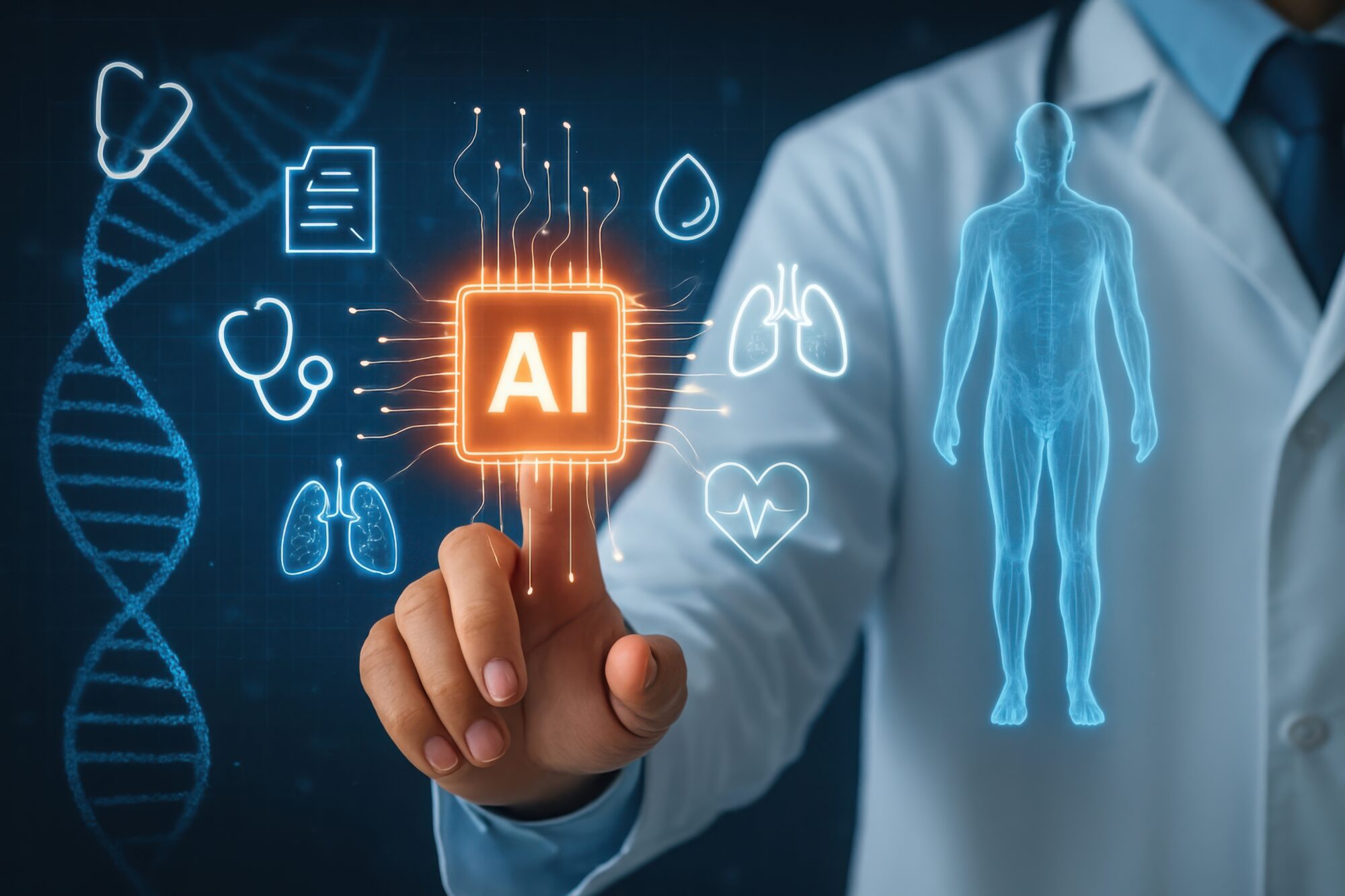
A Shift to Next-Gen Cure: How AI is Transforming Healthcare in 2026?
Artificial Intelligence has had a massive influence on the advancement of healthcare. From precision medicine to telehealth services, we have witnessed how AI moved from being a mere experimental tool to being the primary care partner in 2025!
Cut to the present day, the integration of AI in healthcare has moved beyond diagnostics. In fact, it is slowly on its way to becoming an invisible backbone to the healthcare industry!
How is that so? Well, we’ve discussed all of it in this blog. So, let’s explore till the end to know how AI and technology are transforming the healthcare sector in 2026.
Latest Technology Trends in Healthcare
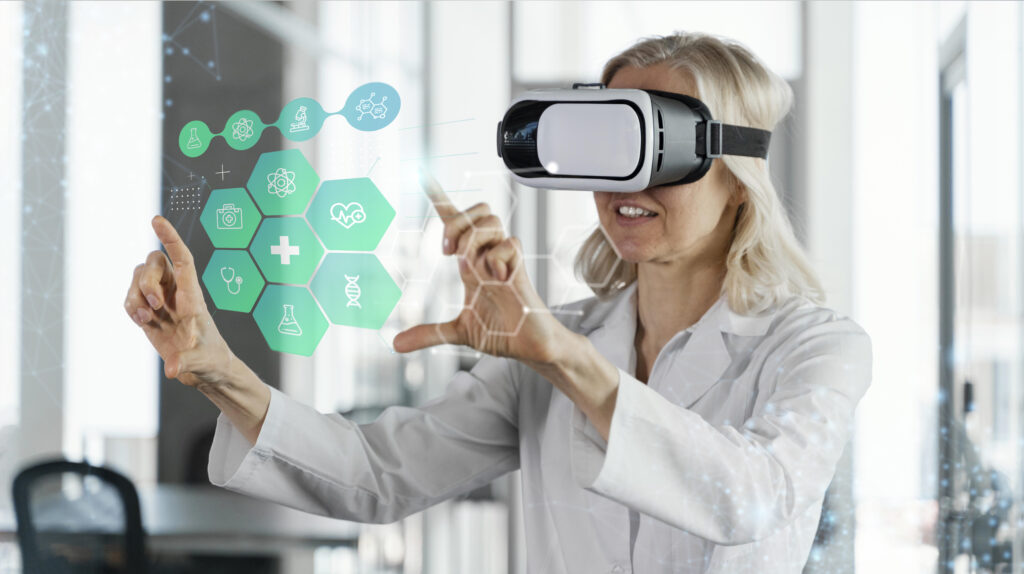
Generative AI for new drug discovery
Generative AI has become the brand-new force for how new medications are created. Researchers are extensively using these models to design unique protein structures that target specific diseases without posing any harm to healthy cells. These new innovations in healthcare are significantly reducing the time required for a new medicine to hit the stores.
Along with that, AI is also helping to generate synthetic patient data, which is essential to check the safety of new drugs. With such diverse approaches, companies can now focus their resources on the most promising compounds identified by the software. Added to that, this major shift promises to make essential treatments much more affordable for everyone.
Virtual hospitals
The concept of telemedicine is evolving into virtual hospitals in 2026.
Wondering what virtual hospitals are? Well, think of it like a hub that delivers healthcare services directly to a patient’s home. Not just that, but these hubs can also connect local or regional facilities with top-notch specialists across the world.
One such instance is Saudi Arabia’s SEHA Virtual Hospital, which connects around 130 hospitals around the country, with a capacity to treat more than 400,000 patients a year. Similarly, the U.K. has announced the opening of the NHS online hospital to transform the healthcare scenario in England.
Therefore, virtual hospitals happen to be one of the top healthcare technology trends in 2026, which is helping to provide quality healthcare to every household.
AI for Gene editing

Combining AI with gene-editing technologies like CRISPR has paved the way to curing previously untreatable hereditary conditions. In 2026, AI is helping scientists predict the exact location where genetic changes will have the most effect. This is one of the biggest healthcare technology trends that works with incredible precision when modifying the building blocks of life.
How so? Well, machine learning models are trained to analyze vast libraries of genetic data to find patterns that humans might overlook. This collaborative approach reduces the risk of unintended tweaks that could result in severe complications in the long run. Every patient receives a tailored genetic strategy based on their specific inherited traits and needs.
Therefore, we can now identify and correct genetic mutations before they cause any serious harm!
AI for predictive healthcare
Predictive healthcare is also one of the latest healthcare trends, where AI-based tools use massive amounts of historical data to predict signs of poor health. For instance, AI stethoscopes can now predict major heart conditions in a matter of seconds! Similarly, AI-based tools have also proved to be effective in detecting breast cancer.
These tools analyze everything from sleep patterns to minute discrepancies, which allows for early intervention and prevents the development of any major illness. As a result, doctors can also prescribe less invasive and more effective treatments.
Not just that, but this is one of the current trends in healthcare technology, where patients feel more empowered when they have a clear view of their future health risks. AI in diagnostics has proven more accuracy in the disease detection which improves the overall treatment plans.
Robotic assistants in practical settings
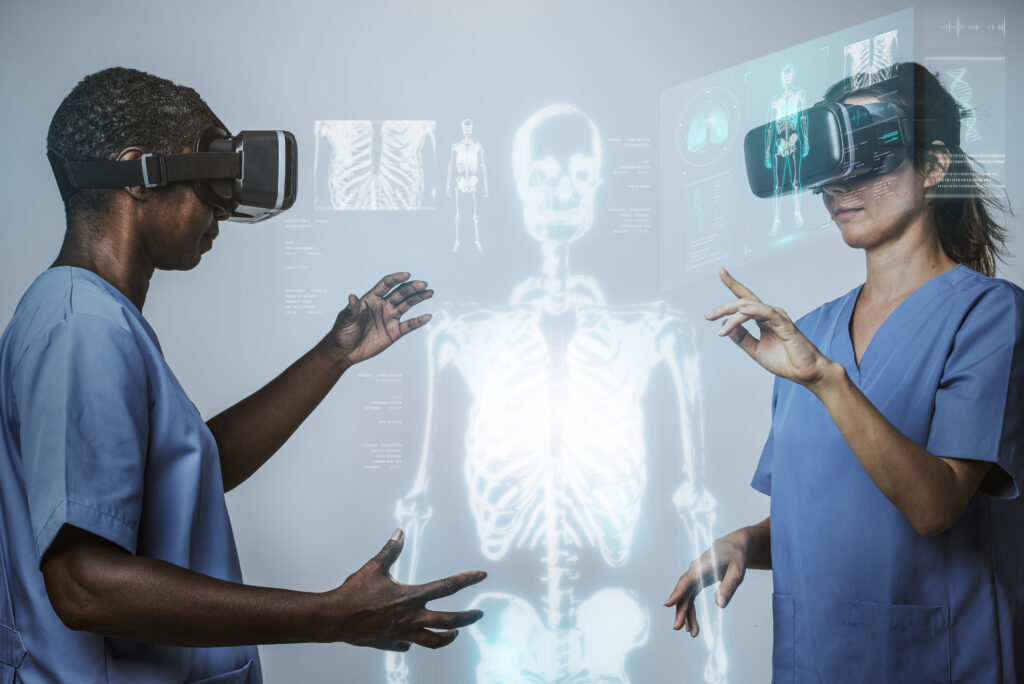
Robots are becoming essential team members in modern clinical settings. Many U.S hospitals have deployed robots to handle staff shortages by covering those repetitive and demanding tasks.
The rapid adoption of these medical technology trends reflects how automation is freeing up human staff for complex work. Healthcare staff, like nurses, can now spend more time offering emotional support and care to their patients.
That being said, repetitive task automation isn’t the only thing that robots are taking care of! Inside the operating room, robotic arms are offering surgeons enhanced stability and a greater range of motion. These machines are capable of performing tiny, precise movements that become impossible for the human hand to replicate.
On top of that, recovery times are becoming shorter because the incisions are much smaller and cause less trauma. Robotics is transforming the hospital from a manual workplace into a high-tech center.
AI for enhanced care delivery

Agentic AI has also helped automate clinical and administrative tasks, like scheduling appointments, processing insurance, and patient follow-ups. This approach has significantly reduced the overall manual workload, which has made healthcare operations much more efficient.
Understanding how AI is transforming healthcare involves looking at how administrative bottlenecks are being handled. Automated scheduling and billing systems ensure that a patient’s journey remains comfortable and seamless.
AI also assists in diagnostic imaging by highlighting areas of concern that require a closer look. This helps radiologists make faster and more accurate decisions. Patients receive their results much quicker, which reduces the anxiety associated with medical testing. Technology is creating a more human-centric experience by removing the friction of bureaucracy.
Wrapping Up
Advancements in AI and technology have ushered in a new era in the world of healthcare. And in 2026, the challenge for doctors, healthcare workers, and policymakers is to harness these innovations with responsibility and care. The goal is to ensure that while AI handles the heavy lifting, humans remain the heart of the process!
Having said that, if you’re interested in sharing such new trends and innovations in the healthcare industry, we at The Healthcare Facts would love to hear from you! Just share your blogs under our write for us health and wellness category, and win a chance to get featured!
FAQs
1. How is AI used in healthcare?
AI is used in different aspects of healthcare for better treatment and diagnosis. For instance, AI helps automate and streamline administrative tasks. Not just that, but AI-powered tools help in diagnosing critical health conditions early on. Added to that, AI-powered software also helps in new drug discovery.
2. What are the top healthcare trends?
Some of the top health trends of 2026 are-
- Focus on proactive and personalized well-being.
- Leveraging AI for diagnostics.
- Virtual hospitals.
- AI for predictive healthcare.
3. Which AI tool is used in healthcare?
Tools like Aidoc, Tempus, PathAI, etc., are extensively used in the healthcare industry, which helps-
- Enhance overall diagnostic accuracy
- Automates and streamlines administrative work.
- Offers personalized treatment.

Eliza Gordon is a seasoned writer for the health industry dedicated to providing fact-based health information. She sources concise facts from authoritative sources to ensure maximum credibility and shares guidelines to lead a healthy lifestyle.
About Us

The Healthcare Facts is a blog site that posts regular content on fitness, healthy eating, weight loss, healthy mind and wellness. The aim of the blogs is to encourage people stay fit and healthy physically, mentally and spiritually.
Copyright © 2026 The Healthcare Facts. All Right Reserved.