
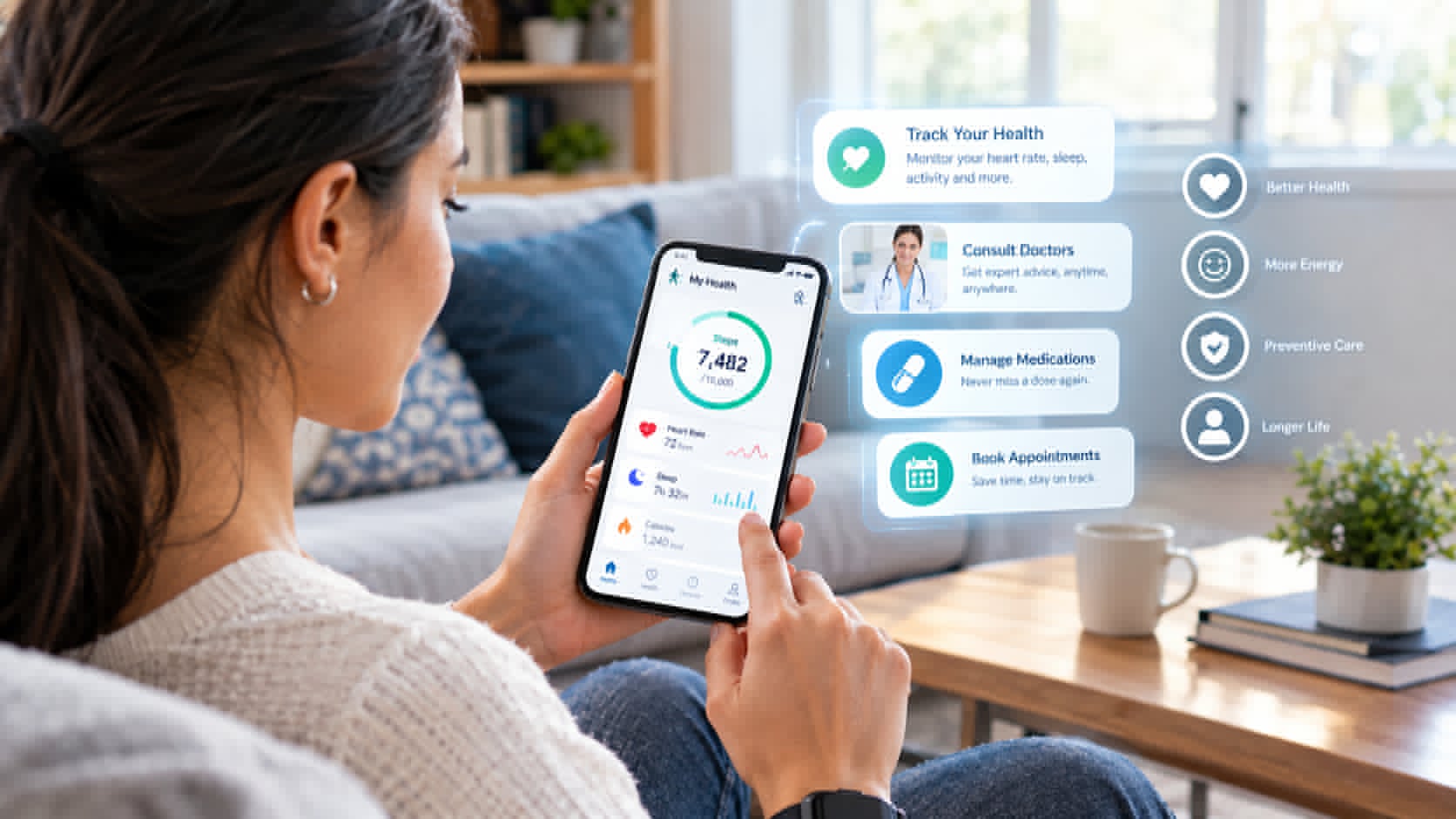
Healthcare Apps Are Changing How People Manage Their Health
Denise had been managing type 2 diabetes for six years using the same routine: a paper logbook for glucose readings, a pill organizer on the kitchen counter, and a quarterly appointment where she’d try to reconstruct six months of patterns from memory for her doctor. The visit that changed things wasn’t a new medication. It was her clinic switching to a remote monitoring app that pulled readings straight from her glucose meter, flagged the mornings her numbers ran high, and let her doctor spot the pattern two weeks before her next scheduled visit instead of three months after it started.
That shift, from a paper logbook reconstructed from memory to continuous, real-time data a care team can actually act on, is exactly why demand has grown for a healthcare app development company similar tech hubs across the country. The mobile health market has been on a steep upward trajectory, with global projections putting it well past $300 billion, and most of that growth is coming from precisely the category Denise’s clinic adopted: apps that manage chronic conditions continuously instead of treating each doctor visit as an isolated snapshot. Here’s what’s actually driving that shift, and what it takes to build something in this category that clinicians and patients both trust.
Why Chronic Disease Management Became the Center of Gravity
Diabetes, hypertension, and heart failure share a common problem: they need continuous monitoring that a quarterly office visit simply cannot provide on its own. A patient’s blood pressure doesn’t wait for an appointment to spike, and neither does a glucose crash. Remote patient monitoring apps close that gap by collecting biometric data from connected devices, blood pressure cuffs, glucose meters, wearables, and streaming it to a care team in something close to real time, so a concerning trend gets caught while it’s still manageable instead of after it’s already become a hospital admission. Medicare and private insurers have expanded reimbursement for exactly this kind of monitoring, which has turned what used to be a nice-to-have feature into something clinics actively request when they commission a new app.
What’s Actually Inside a Trustworthy Healthcare App
The features that show up across nearly every serious healthcare build now include secure messaging between patients and providers, medication reminders tied to actual adherence tracking rather than just a generic alarm, a patient portal for lab results and visit summaries, and increasingly, AI-assisted symptom checking that helps a patient decide whether something needs urgent attention or can wait for a scheduled visit. Telemedicine integration has moved from an optional add-on to close to a baseline expectation, since virtual visits are now the default channel for prescription renewals and minor illness management rather than the alternative to an in-person visit. None of these features work in isolation. A medication reminder means little without adherence data flowing back to a care team, and a symptom checker means little without a clear path to an actual clinician when something looks serious.
Where Compliance Shapes Every Design Decision
Healthcare apps operate under a regulatory weight that a typical consumer app never has to carry. HIPAA sets the baseline for how patient data gets stored, transmitted, and accessed, and that requirement touches nearly every architectural decision, from how data gets encrypted in transit to how audit logs track exactly who viewed a record and when. A development team building in this space has to treat compliance as a design constraint from the very first wireframe, not a checklist item addressed after the interface is finished, because retrofitting encryption and access controls into an app that’s already handling real patient data is a far more expensive and disruptive process than building them in from day one.
What Actually Drives the Price of a Build Like This
A straightforward medication reminder or appointment scheduling app sits at the low end of the range, while a full telemedicine platform with encrypted video, waiting room functionality, and provider calendar integration runs considerably higher, often stretching development timelines toward the better part of a year once HIPAA-compliant infrastructure, EHR integration, and device connectivity all enter the picture. Healthcare app development cost tends to scale less with how the app looks and more with how many outside systems it has to talk to safely. Remote monitoring builds add their own layer of engineering complexity, since pulling reliable data from wearables and medical devices, transmitting it securely, and surfacing it in a dashboard clinicians will actually check requires a level of technical rigor a simple wellness tracker never has to meet. The single biggest cost driver across nearly every serious healthcare build is integration, connecting to existing electronic health record systems, medical devices, and insurance eligibility checks, rather than the patient-facing interface itself. A clinic adopting a system like Denise’s usually spends more of the budget getting that data pipeline right than on anything a patient ever taps on screen.
What Changed for Denise
Denise still keeps a version of her old routine, checking her glucose at the same times each day, but she’s no longer reconstructing six months of memory in a fifteen-minute appointment. Her doctor already has the pattern before she walks in the door, which means the visit is spent adjusting her actual treatment instead of just catching up on data that’s already three months stale. That’s the real shift underway across healthcare right now, not a flashier interface or a new feature list, but continuous information finally reaching the people who can act on it while it still matters.

Eliza Gordon is a seasoned writer for the health industry dedicated to providing fact-based health information. She sources concise facts from authoritative sources to ensure maximum credibility and shares guidelines to lead a healthy lifestyle.
Related Articles

How to Build a Sustainable Wellness Routine That Fits Everyday Life
The idea of wellness is usually presented as a set of perfect practices, including working out in the morning, balanced meals, meditation, and a strict bedtime. The truth, however, is…
read more
Best Practices for Attaining Mindfulness- 10 Effective Exercises to Help You Out
Are you getting distracted quite easily, and cannot stay with one single line of thought for more than a few seconds? Well, it’s not entirely your fault! Today’s lifestyle, nature…
read moreAbout Us

The Healthcare Facts is a blog site that posts regular content on fitness, healthy eating, weight loss, healthy mind and wellness. The aim of the blogs is to encourage people stay fit and healthy physically, mentally and spiritually.
Copyright © 2026 The Healthcare Facts. All Right Reserved.