
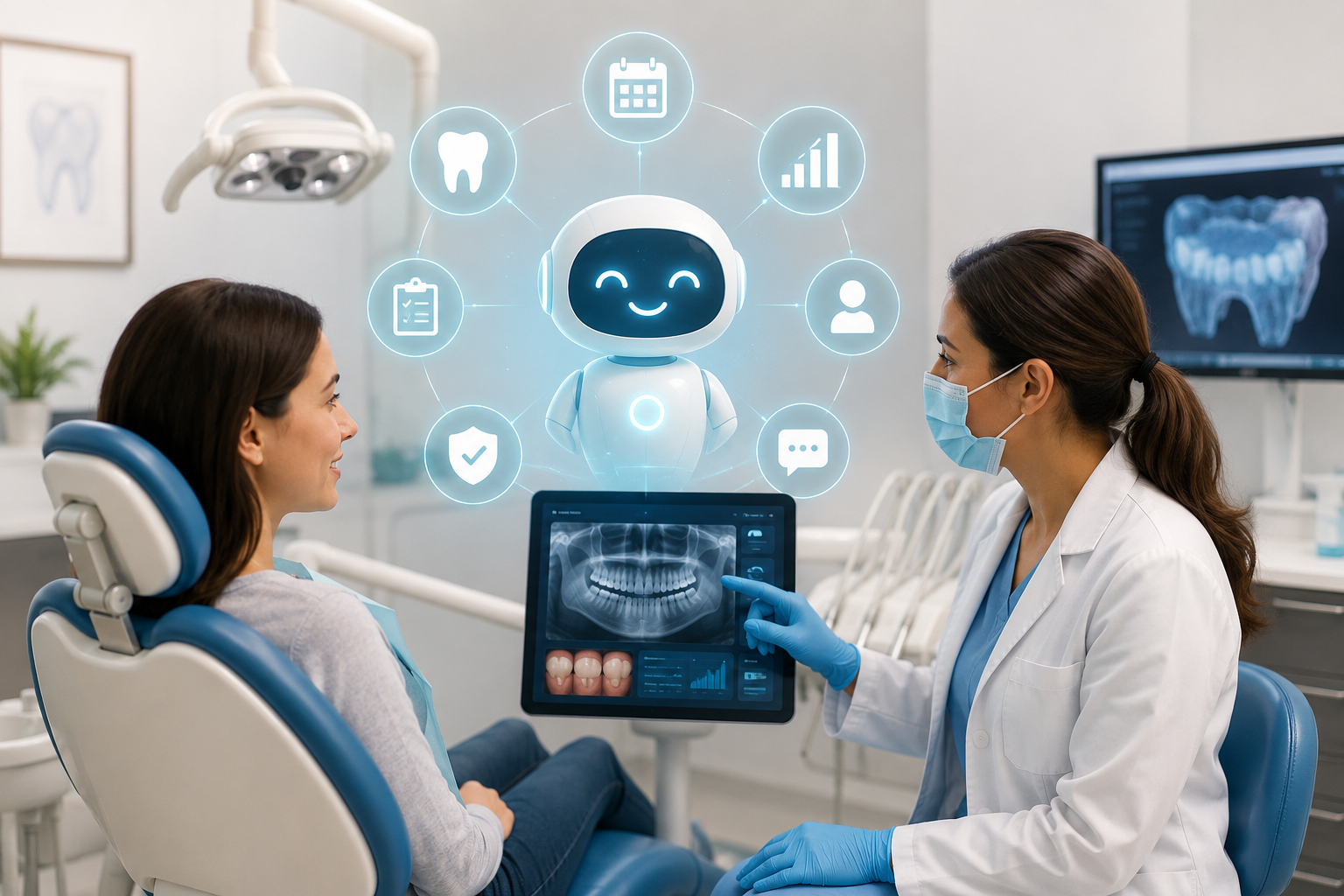
The Role of Agentic AI in Modern Dental Clinics in 2026
Patient care has always been the heart of dentistry. Yet, behind every successful dental practice lies a mountain of administrative work—from managing appointments and patient records to processing insurance claims and monitoring inventory. These repetitive tasks often consume valuable clinical time, leaving dentists and their teams stretched thin.
That’s where Agentic AI in healthcare comes in.Research published by Evidence-based Dentistry showed up to 95% diagnostic accuracy with AI, especially in dentistry. Capable of multitasking and intelligent decision-making, it handles the operational heavy lifting so dentists can get back to what matters most: their patients. It instantly became clear to me that the future of dentistry isn’t just about high-tech machinery but about smart, adaptive AI solutions.
As patient expectations rise and dental practices face increasing operational pressures, Agentic AI is emerging as a practical solution to improve efficiency, enhance patient experiences, and support better clinical outcomes. Here’s how it’s reshaping modern dentistry.
What Is Agentic AI in Dentistry?

AI has been part of cosmic dentistry for several years, helping clinicians analyze dental radiographs, automate documentation, and answer basic patient enquiries. Agentic AI, however, represents the next evolution in dental practice automation.
Unlike conventional AI systems that respond only to individual prompts, Agentic AI is designed to achieve goals autonomously. It can analyse information, make decisions within predefined guidelines, coordinate multiple software systems, and complete entire workflows without constant human intervention.
This capability is powered by a combination of machine learning, natural language processing (NLP), predictive analytics, and reasoning models. Together, these technologies enable Agentic AI to understand context rather than simply follow predefined rules.
For example, if a patient cancels a last-minute appointment, Agentic AI can:
- Identify another patient waiting for an earlier appointment.
- Confirm the dentist’s availability.
- Send an automated booking invitation.
- Update the practice management system.
- Notify the clinical team of the schedule change.
Instead of requiring multiple staff members to complete these tasks manually, the entire process happens within seconds.
It’s important to note that Agentic AI does not replace dentists. Clinical decisions remain the responsibility of qualified healthcare professionals’ guide. Rather, the technology serves as an intelligent assistant, reducing administrative burdens while providing data-driven insights that support better decision-making.
How Agentic AI Is Transforming Dental Clinic Operations

Agentic AI helps solve operational challenges while supporting smarter business goals.
Appointment Scheduling
Appointment scheduling is one of the most resource-intensive responsibilities in any dental practice. Missed appointments, last-minute cancellations, and scheduling conflicts can significantly reduce revenue while disrupting the day’s workflow.
Agentic AI’s capabilities include:
- Automatically scheduling appointments based on clinician availability and treatment requirements. Agentic AI handles calls and texts, including WhatsApp messages, to keep track of patients and maintain after-hours booking demands, including detecting cancellations instantly and filling vacant slots with patients awaiting earlier appointments.
- Agents connect directly with practice management software (PMS) to view live operatory and dentist availability. Agentic AI automatically updates and books appointments, optimizing appointment slots without manual intervention. Moreover, AI updates patients’ calendars. It identifies patients who are most likely to delay treatment and sends timely reminders or alerts to the dental team. This helps in knowing the availability of the patient before allotting a slot for a completely new patient.
- Agentic AI also takes active follow-ups. AI sends customized messages based on patient history and charts. AI asks simple questions to the patients after their appointment. If the patient replies that they are in severe pain, Agentic AI instantly alerts the human staff so that a real dentist can handle the situation.
Consider a busy practice with four dentists. If one patient cancels a two-hour implant consultation at short notice, Agentic AI can immediately identify another suitable patient from the waiting list, confirm availability, and send an appointment notification. What previously required several phone calls can now be completed automatically within minutes.
Patient Communication
Modern AI goes far beyond basic chatbots that simply answer quick questions. While traditional AI handles quick, convenient patient inquiries, Agentic AI takes communication a step further by integrating deep clinical insights. It evaluates patient medical and dental histories alongside previous treatment outcomes to identify potential risk factors early.
- Agentic AI uses smart digital assistants like AI scheduling, AI chatbots, and voice agents to handle conversations, think, and make informed decisions like a human receptionist.
- Integrating AI into clinic operations not only saves time for staff but also significantly improves patient comfort, much like how sedation dentistry simplifies dental care by ensuring a smoother, stress-free clinic visit. Agentic AI responds to messages even if it is a Sunday afternoon, using natural language processing (NLP) to understand queries and autonomous decision-making to provide accurate responses. It offers guidance even in urgent situations or caters to middle-of-the-night appointments.
- AI agents in healthcare support real-time data integration and autonomous task execution for seamless patient communication. This initiates proactive patient scheduling to prevent the wastage of any slot.
Better Treatment Planning
The best AI tools for dental clinics usepredictive modeling to aid in diagnosing dental conditions more consistently and lessen the likelihood of any errors. There are tools such as Pearl, Overjet, and Diagnocat that analyze 2D and 3D dental images, providing a consistent second opinion that reduces diagnostic errors. Here’s what else Agentic AI can do:
- It analyzes the patient before they move forward in the dental session. Early diagnosis of problems like cavities and bone decay helps ensure early action and improved treatment outcomes.
- It explains the importance of completing procedures, such as crowns after root canals or follow-up periodontal therapy, in simple language.
- It can also interpret reports, X-rays, and clinical notes, easily simplifying them for patients to decode. This also helps patients make fast decisions by proactively guiding patients through their entire care journey instead of just focusing on scheduled assistance.
Improved Financial Performance
Agentic AI streamlines financial and administrative tasks, minimizing errors. When more patients complete recommended treatments, the practice generates steady revenue and maintains a healthier budget. Further benefits of Agentic AI in dentistry include:
- Scheduling
- Billing
- Insurance processing
- Lowering the need for additional administrative staffing
Agentic AI recommends avoiding scheduling gaps and maintaining a balanced budget. By reducing missed appointments, Agentic AI supports predictable income and better budget planning.
Furthermore, AI sends payment reminders to the patients, identifies operational influences, and improves performance metrics. AI assists the patients by providing correct data and proper report analysis. This creates a smoother, more predictable experience for patients whenever they step into the clinic.
Improved Supply Management
Inventory and supply management is one of the most critical yet time-consuming aspects of running a dental clinic. Agentic AI can help with that.
- Digital transformation in laser dentistry helps predict supply usage patterns, enabling automated restocking that keeps the clinic’s supply chain running seamlessly.
- To eliminate waste, AI agents continuously track batch numbers and expiration dates for temperature- and time-sensitive materials like anesthetics, impression pastes, and composite resins. The system also flags sudden spikes in usage or potential loss, instantly alerting practice managers before small discrepancies turn into costly issues.
- Agentic AI monitors inventory levels and material usage, ensuring clinicians always have the supplies they need while minimizing waste. From dental consumables like gloves, masks, and anesthetics to expensive equipment —keeping track of stock levels requires proper supervision.
Agentic AI for Dental Clinics
Here are the benefits of AI in dental clinics in a tabular format
| Benefits | Business impact |
| Reduced workload | Doctors can give more time to patients |
| Patient communication | Patient satisfaction |
| Financial insights | Improves prosperity and profitability |
| Proper data-driven decisions | Good relations with patients |
Risks of Implementing Agentic AI
Despite its advantages, Agentic AI is not a replacement for skilled dental professionals. Successful implementation depends on combining intelligent automation with clinical expertise.
- One of the biggest considerations is patient privacy. Dental practices handle highly sensitive health information, making compliance with regulations such as HIPAA in the United States and GDPR in Europe essential. AI platforms should use strong encryption, role-based access controls, audit logs, and secure cloud infrastructure to protect patient data.
- Integration is another common challenge. Many clinics still rely on older practice management systems that may require upgrades before supporting advanced AI capabilities. Choosing AI solutions that integrate with existing workflows can significantly reduce implementation complexity.
- Staff training is equally important. Even the most advanced technology delivers limited value if employees don’t understand how to use it effectively. Dentists and administrative teams should view Agentic AI as a productivity tool that enhances their work rather than replaces their expertise.
- Perhaps the most important principle is maintaining human oversight. AI can analyse information, identify patterns, and generate recommendations, but final clinical decisions should always remain with qualified dental professionals. Responsible AI adoption means combining technological efficiency with human judgement, empathy, and ethical responsibility.
Agentic AI vs Traditional Dental Software
Here is the table showing the main differences between AI-generated dental software and traditional software.
| Feature | Agentic AI | Traditional dental software |
| Role | A dental assistant | For managing clinical data |
| Decision making | Diversified | Fixed |
| Patient interactivity | Proactive | Basic |
| Efficiency | Saves time by providing proper work | Focuses on routine tasks |
According to WHO, artificial intelligence has the potential to improve efficiency in the healthcare field while maintaining human oversight and patient safety. So moving forward, it should become a hybrid approach where traditional software stores information, while Agentic AI helps practices act on it.
Key Thoughts
Dental clinic management software in dentistry will form a connected ecosystem of technologies. Successful dental practices will use AI as a productivity tool to provide intelligent automation with human care. Dental practices that embrace the right technologies will also be able to provide efficient, data-driven, and patient-centric care in the future. To conclude, if AI is implemented responsibly, it can become a strategic partner not only in dental but in all fields of healthcare services in 2026. If you are interested in healthcare or dental fields, feel free to share your tips at Write for us dental care.
Disclaimer: This article is for informational purposes only and should not be considered medical, dental, or professional business advice.
FAQs
1. Why are dental practices adopting Agentic AI in 2026?
Dental practices are adopting Agentic AI in 2026 because it helps automate time-consuming administrative tasks while improving operational efficiency and patient care. Unlike traditional software, Agentic AI can manage appointment scheduling, patient communication, billing, inventory, and documentation with minimal human intervention. It also supports dentists by providing data-driven insights for treatment planning, allowing clinical teams to spend more time with patients and less time on repetitive tasks.
2. What are the biggest benefits of Agentic AI for dentists?
Agentic AI helps dentists save time by automating repetitive administrative tasks, improving appointment management, and streamlining billing and insurance processes. It also supports clinical decision-making by analysing patient records, radiographs, and treatment histories to provide data-driven insights. By reducing manual work and improving workflow efficiency, dentists can focus more on delivering personalised, high-quality patient care.
3. How does Agentic AI help manage dental records?
Agentic AI simplifies dental record management by automatically organizing patient information, treatment histories, digital X-rays, clinical notes, and appointment records in a centralized system. It can quickly retrieve relevant data, generate clinical summaries, flag missing information, and update records in real time. This reduces manual data entry, improves documentation accuracy, and ensures dentists have easy access to complete patient histories when planning treatments.
4. What technologies power Agentic AI in dentistry?
Agentic AI combines several advanced technologies, including:
- Machine learning (ML)
- Natural language processing (NLP)
- Predictive analytics
- Computer vision
- Large language models (LLMs).
These technologies enable AI systems to analyse clinical data, interpret dental images, understand patient interactions, automate workflows, and make intelligent recommendations. Working together, they allow Agentic AI to support both administrative efficiency and clinical decision-making while keeping dentists in control of patient care.

Eliza Gordon is a seasoned writer for the health industry dedicated to providing fact-based health information. She sources concise facts from authoritative sources to ensure maximum credibility and shares guidelines to lead a healthy lifestyle.
Related Articles

Laser Dentistry: The Modern Way to Achieve a Painless Smile!
This blog delves into a detailed discussion on laser dentistry. Learn about the types, advantages, and limitations, and explore their safety applications.
read more
The Significance of Robotic Dental Implant Procedures
Robotics is revolutionizing several fields of the healthcare industry but when it comes to dentistry, you just have to watch for more. For those considering implants, you have to delve…
read moreAbout Us

The Healthcare Facts is a blog site that posts regular content on fitness, healthy eating, weight loss, healthy mind and wellness. The aim of the blogs is to encourage people stay fit and healthy physically, mentally and spiritually.
Copyright © 2026 The Healthcare Facts. All Right Reserved.